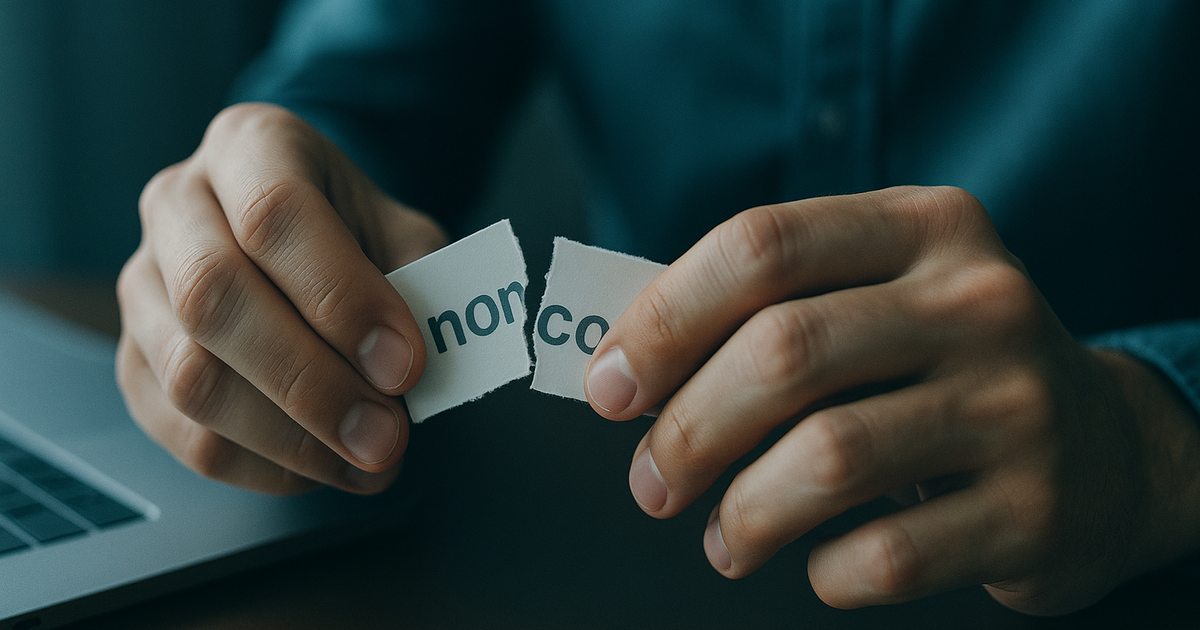

Does Your Domain Match Your Brand Name? A 5-Point Audit
A simple 5-point audit to check whether your domain name matches your brand name — built for Atlanta business owners who want a web address as strong as their reputation.
Your brand name is the promise. Your domain name is the front door people walk through to keep that promise. When the two line up, customers find you fast, trust you sooner, and remember you longer. When they drift apart, you lose traffic, credibility, and — in a competitive metro like Atlanta — a real edge over the shop down the street.
So here's a fair question: does your domain name actually match your brand name? Not "close enough." Not "the version we settled for years ago." A true, clean match. This guide walks Atlanta business owners, brands, and investors through a practical 5-point audit you can run in about ten minutes. By the end, you'll know exactly where your web identity is strong and where it's quietly costing you.
Why Domain Name Matching Brand Name Matters More Than You Think
People form an opinion about your business in seconds. Long before they read your "About" page, they read your URL. A domain that matches your brand name signals that you're established, organized, and easy to do business with. A mismatched one — full of hyphens, odd spellings, or a bolted-on "the" — plants a small seed of doubt.
There's a search angle too. When someone hears about your Atlanta business at a networking event or a Beltline pop-up, the first thing they do is type your name into a browser or search bar. If your domain and brand name match, you show up right where they expect. If they don't, you hand that click to a competitor, a directory, or a confused dead end.
Google has said for years that a memorable, trustworthy brand is one of the strongest long-term signals a business can build. As their own guidance on helpful content makes clear, sites that people know and seek out by name tend to earn lasting authority. Your domain is the foundation of that recognition.
The 5-Point Domain and Brand Audit
Grab your brand name and your current domain. Score yourself on each point below. Give one point for a clean pass, half a point for "needs work," and zero for a clear fail. We'll add it up at the end.
1. The Exact-Match Test: Do They Read the Same?
Say your brand name out loud, then read your domain. Do they match word for word? If your business is Peachtree Home Studio, the ideal domain is peachtreehomestudio.com — not peachtree-home-studio.net or peachtreehomestudioatl.com.
Every extra word, hyphen, or suffix is a small tax on memory. Customers forget the "the." They forget the dash. They forget the "ATL" you tacked on the end. An exact-match domain removes that friction entirely.
- Pass: Domain equals your brand name, no extra words.
- Needs work: One small add-on, like a location tag or short word.
- Fail: Multiple hyphens, abbreviations, or a name that barely resembles your brand.
Not sure whether an exact match or a more creative option suits you? Our breakdown of exact-match vs. brandable domains digs into that decision for Atlanta businesses.
2. The Extension Test: Are You On the Right TLD?
The part after the dot — .com, .co, .net, and so on — is your extension, or TLD. For most businesses, .com is still the gold standard. It's what people type by default and what they trust most.
If your brand lives on a lesser-known extension while someone else owns the matching .com, you have a real problem: you're sending traffic — and possibly customers — straight to them. Type your exact brand name followed by .com and see who answers the door.
If your customers assume you're a .com and you're not, every printed card, van wrap, and Instagram bio is quietly pointing people somewhere else.
3. The Spelling Test: Can People Type It Without Thinking?
A domain that matches your brand name only helps if people can actually spell it. Read your domain to a friend over the phone and ask them to type it. Watch what happens.
Watch out for:
- Creative spellings ("Kreative," "Xpress," "Studioz")
- Words that sound the same but spell differently (to/two, for/four)
- Doubled letters where one word ends and another begins ("homemakeover" reading as "homemake over")
- Numbers that could be digits or words ("5" vs. "five")
Every ambiguity is a fork in the road where a customer can go the wrong way. The best domains are the ones people can spell after hearing them once.
4. The Voice Test: Does It Feel Like Your Brand?
Matching isn't only about letters — it's about tone. A sleek, minimalist Atlanta design studio and a rugged Southern barbecue joint should feel different the moment someone reads the URL. If your brand is polished and modern but your domain feels clunky or dated, there's a mismatch even when the words technically line up.
Ask yourself: if a stranger only saw your domain, would they guess the right personality for your business? If not, something's off. We cover this in depth in 7 signs your domain and brand voice don't line up, and offer a game plan in how to pick a domain that reflects your brand's personality.
5. The Local Test: Does It Serve Your Atlanta Audience?
Here in metro Atlanta, geography can be an asset. A geo-domain — one that includes "Atlanta" or a neighborhood name — can boost recognition and support local SEO when it fits your brand naturally. For some businesses, a name like atlantabrandstudio.com is a perfect match. For others, adding "Atlanta" muddies a clean brand name.
The audit question is simple: does your domain help the right local customers find and trust you? If you serve a specific metro market, a geo-signal can help. If you're building a brand meant to travel beyond the perimeter, keep it tight. Weigh both sides with our guide on whether your domain should include "Atlanta."
Scoring Your Audit
Add up your points across all five tests:
- 4.5–5 points: Excellent. Your domain and brand name are working together. Protect that asset and consider locking down close variations before someone else does.
- 3–4 points: Solid but leaky. You're losing a bit of traffic or trust in one or two areas. Small fixes — a better extension, a cleaner spelling — can tighten things up fast.
- Below 3 points: Your domain is holding your brand back. It's worth seriously exploring a stronger, matching domain before you invest more in marketing that points to the wrong door.
What to Do When Your Domain Doesn't Match
A low score isn't a failure — it's an opportunity. The businesses that win online are the ones willing to fix the foundation. You have a few clear paths:
- Acquire the matching domain. Often the cleanest fix is simply securing the exact-match or .com version of your name.
- Tighten your brand name to match an available domain. Sometimes a small brand tweak unlocks a far stronger web identity.
- Plan a coordinated update. If you're already thinking about a refresh, sync the two at once. Our guide on rebranding without losing your domain shows how to do it without dropping your search rankings.
Whatever path you choose, the goal is the same: domain name and brand consistency that makes your business instantly findable and effortlessly memorable.
Your Web Identity Should Match Your Reputation
For Atlanta's designers, decorators, and home brands especially, presentation is everything. You wouldn't hand a client a portfolio with a coffee stain on the cover — so why send them to a domain that doesn't match the polish of your work? A premium, memorable domain is the digital version of a beautifully staged room: it sets the tone before a single word is spoken.
If your audit revealed gaps, the good news is that a stronger match may be within reach right now. Browse the available premium Atlanta domain names and find a web address that reflects your aesthetic, honors your local reputation, and finally matches the brand you've worked so hard to build. Secure your front door — before someone else does.
Frequently asked questions
What if the .com matching my brand name is already taken by someone else
If someone else owns the matching .com, you're likely sending traffic and customers straight to them every time people type your brand name by default. The cleanest fixes are to acquire that exact-match domain, tighten your brand name to match an available one, or plan a coordinated update.
Is it bad to add atlanta to my domain if it doesn't exactly match my brand name
Adding 'Atlanta' can help when you serve a specific metro market by boosting local recognition and SEO, but it can muddy a clean brand name if you're building something meant to travel beyond the perimeter. Ask whether the geo-signal helps the right local customers find and trust you before adding it.
How much does a mismatched domain name actually cost my business
A mismatch quietly costs you traffic, credibility, and clicks, since people who hear your name and can't find the matching domain often land on a competitor, a directory, or a dead end. In a competitive metro like Atlanta, that lost recognition also weakens your long-term search authority.
Can my domain match my brand name and still feel wrong
Yes, matching isn't only about letters but also about tone. If your brand is polished and modern but the domain reads as clunky or dated, there's a voice mismatch even when the words technically line up.
Should I lock down misspelled or hyphenated versions of my domain too
If your domain and brand name already match well, it's smart to protect that asset by locking down close variations before someone else does. This keeps competitors and confused customers from being routed to the wrong door.
Is a creative spelling in my domain a problem if it matches my brand
Creative spellings like 'Kreative' or 'Studioz,' sound-alike words, and ambiguous numbers all create forks where customers can type the wrong thing. Even a domain that matches your brand only helps if people can spell it correctly after hearing it once.