
Domain Hijacking vs. Cybersquatting: What Atlanta Owners Should Know
Domain hijacking and cybersquatting are two very different threats to your Atlanta brand. Here's how to tell them apart—and what to do about each one.
Two Atlanta business owners lose control of a web address in the same month. One wakes up locked out of a domain she has owned for years. The other discovers a stranger registered a near-copy of her company name and is running ads on it. Both are furious. Both feel robbed. But legally—and practically—they are dealing with two completely different problems.
Understanding domain hijacking vs cybersquatting is one of the most useful things an Atlanta brand can learn before trouble ever shows up. The response you choose, the people you call, and the odds of getting your name back all depend on which one you're facing. Let's break it down in plain terms.
The short version
Here's the distinction in a single breath:
- Domain hijacking is theft. Someone takes a domain you already own—usually by breaking into your registrar account or tricking your provider into transferring it.
- Cybersquatting is bad-faith registration. Someone grabs a domain that reflects your brand or trademark before you do, then tries to profit from it.
One is a break-in. The other is a land grab. Both can hurt an Atlanta business, but they call for different playbooks.
What domain hijacking actually looks like
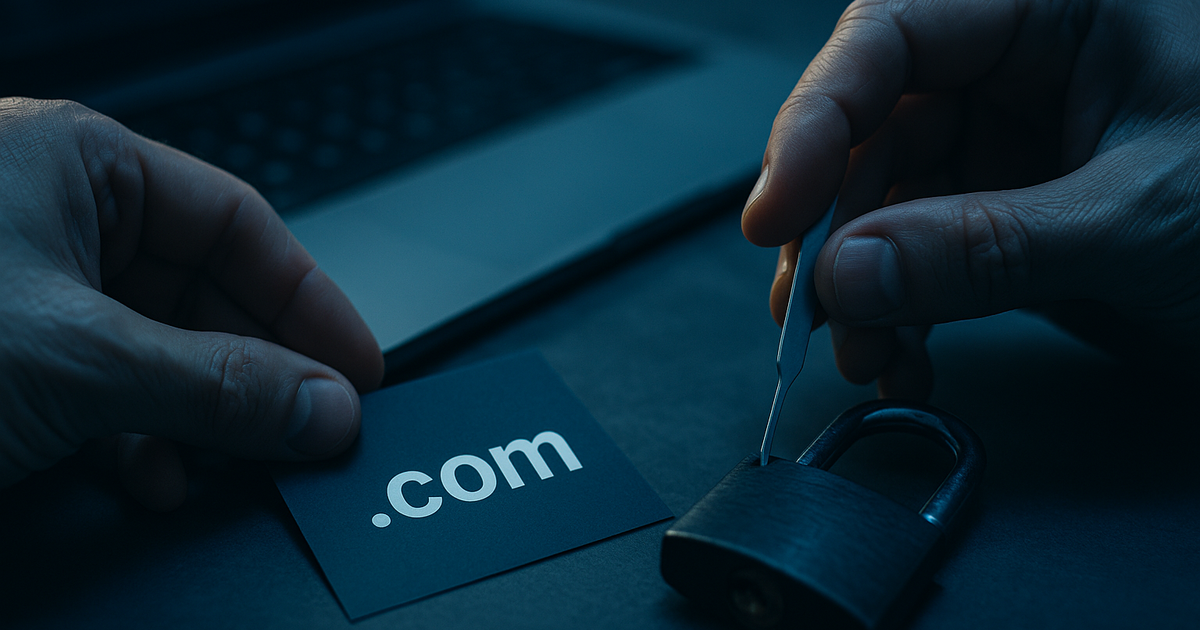
Domain hijacking happens when a bad actor gains unauthorized control of a domain that is rightfully yours. You held the registration. You paid the bills. Then, through some form of fraud or account compromise, control slipped out of your hands.
Common ways it happens:
- Account takeover. A weak or reused password lets someone log into your registrar and change the settings.
- Phishing. A fake "renew your domain" email tricks a staffer into handing over credentials.
- Social engineering. An attacker convinces your registrar's support team to make changes by impersonating you.
- Unauthorized transfers. The domain is pushed to a new registrar or a new owner without your consent.
The telltale signs are sudden and jarring: your website goes dark, your email stops working, or you find you can no longer log in to manage the domain. If any of that sounds familiar, start with the early warning signs of a hijacked Atlanta domain and move fast—the first day matters enormously.
Why speed matters with hijacking
Once a hijacked domain is transferred to another registrar or sold to a third party, recovery gets harder and more expensive. That's why our guide on what to do in the first 24 hours after your domain is stolen exists. Lock down every connected account, contact your registrar immediately, and document everything. In many cases, your registrar can reverse the theft if you reach them before the trail goes cold.
What cybersquatting actually looks like
Cybersquatting is different because you never owned the domain in the first place. Someone else registered it—often deliberately targeting your brand, your trademark, or a common misspelling of your company name—hoping to cash in.
Classic cybersquatting moves include:
- Registering your exact brand name on a different extension after you launch.
- Grabbing typo variations of your domain to catch mistyped traffic (sometimes called "typosquatting").
- Sitting on a name and demanding a huge ransom to sell it to you.
- Running ads, redirects, or lookalike pages that trade on your reputation.
The key legal ingredient is bad faith. Someone who happens to own a generic word that overlaps with your name isn't necessarily a squatter. A cybersquatter is someone registering a name with the intent to profit from your established brand.
The legal tools are different
Because cybersquatting is about rightful ownership rather than stolen access, it's usually resolved through trademark-based processes rather than a registrar security ticket. Two main paths exist in the United States:
- The UDRP (Uniform Domain-Name Dispute-Resolution Policy), an arbitration process overseen by ICANN and administered by bodies like the World Intellectual Property Organization (WIPO).
- The ACPA (Anticybersquatting Consumer Protection Act), a federal law you can pursue in U.S. court.
If you believe someone is squatting on a name tied to your Atlanta brand, our walkthrough on how to file a UDRP complaint explains the process step by step.
Domain hijacking vs cybersquatting: a side-by-side
When you strip away the jargon, the difference comes down to a few practical questions.
Did you own the domain before the problem started?
If yes, and you lost control of it, you're likely dealing with hijacking. If the domain was never yours and someone else registered it to exploit your name, that's cybersquatting.
Who do you call first?
For hijacking, your first call is your registrar's security or abuse team, followed by law enforcement if needed. For cybersquatting, your first stop is usually a trademark attorney and a UDRP or ACPA filing.
What's the core issue?
Hijacking is fundamentally a security and account-control problem. Cybersquatting is a trademark and bad-faith problem.
How much will it cost?
The bills look different too. Recovering a hijacked domain may involve registrar cooperation, legal help, or a negotiated buyback, while a cybersquatting case leans on filing fees and attorney time. We break the numbers down in the real cost of recovering a hijacked domain.
Bottom line: hijacking asks "how did someone take what's mine?" Cybersquatting asks "how do I claim what should have been mine?"
Why this matters more in a city like Atlanta
Atlanta is a branding town. From Buckhead boutiques to Westside studios to fast-growing tech and hospitality startups, this metro is packed with businesses whose names carry real local weight. That reputation is exactly what makes a domain worth stealing—or worth squatting on.
A strong, recognizable Atlanta brand raises the stakes both ways. A hijacker who knows your site drives real revenue has more incentive to break in. A squatter who sees your name gaining traction has more reason to grab the lookalikes and wait for a payday. The more your name means in this market, the more actively you should protect it.
How to protect yourself from both
You can't control everything, but a few habits dramatically lower your risk on both fronts.
- Lock your domain. Turn on registrar lock (also called transfer lock) so no one can move your domain without extra verification.
- Use strong, unique passwords and two-factor authentication on your registrar account. Most hijackings start with a compromised login.
- Register your key variations early. The cheapest way to beat a cybersquatter is to own the obvious versions of your name before they do.
- Keep your contact info current so renewal and security alerts actually reach you.
- Trademark your brand where it makes sense—it strengthens your hand in any UDRP or ACPA dispute.
- Monitor for lookalikes so you catch squatting early, while it's cheap to address.
Notice that several of these steps are about owning the right names in the first place. That's the quiet advantage. The best defense against a squatter is simply beating them to the domain.
Own your name before someone else does
Every Atlanta brand deserves a web address as memorable and confident as the business behind it. Whether you're a designer building a portfolio, a restaurateur opening your third location, or an investor staking out a category, a premium, exact-match domain is more than an address—it's your reputation, locked in.
The strongest protection against both hijacking and squatting is a solid foundation: a name you own outright, secure it properly, and build on for years. Take a look at the available Atlanta domain names and claim the one that fits your brand, your neighborhood, and your future—before someone else has the chance to.